The Man Behind the Mirror: Professor Vincenzo Esposito's Everyday Anthropology at "Dialogalmente"
The Man Behind the Mirror: Professor Vincenzo Esposito's Everyday Anthropology at "Dialogalmente"
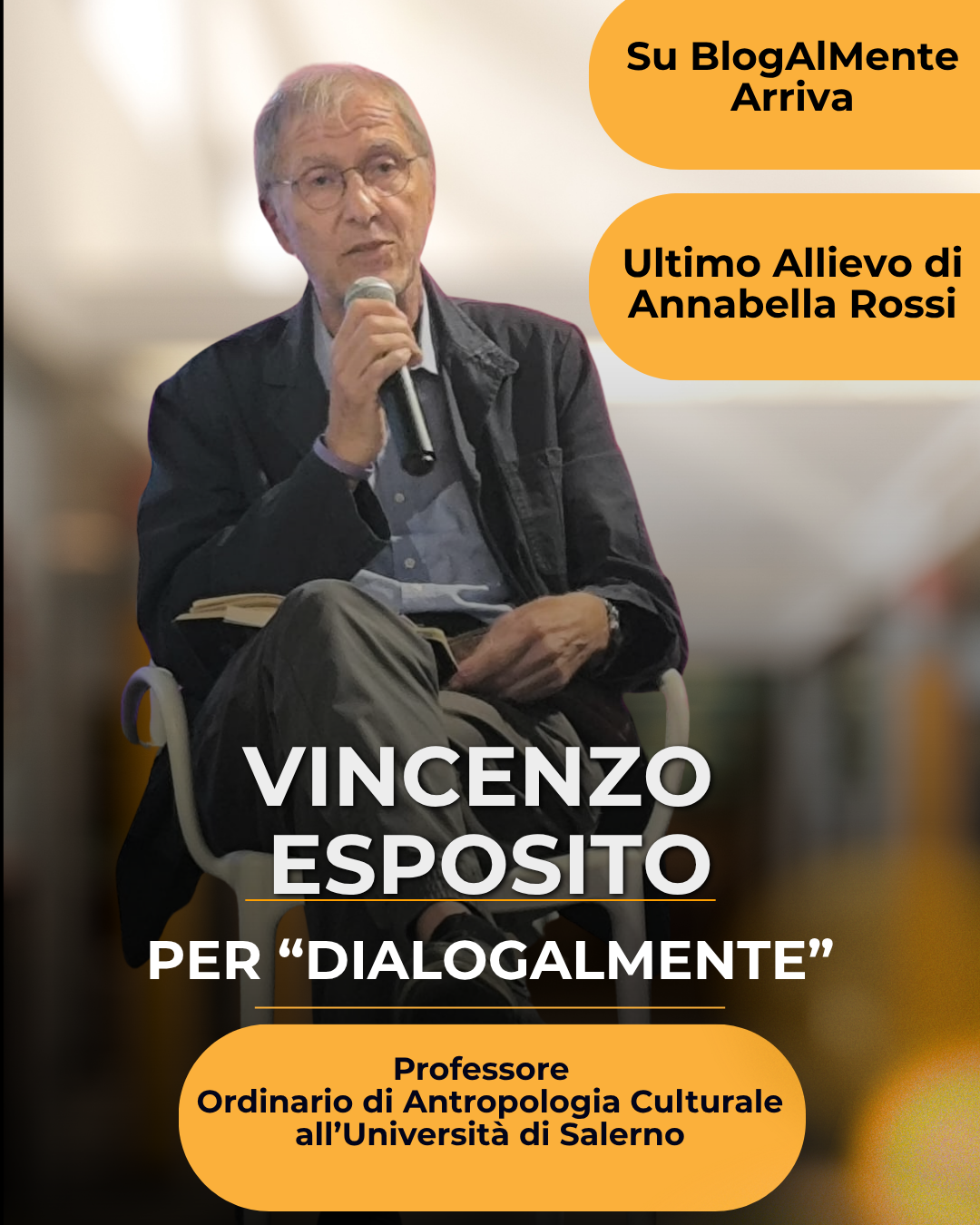
There are school or academic subjects that, let's face it, sometimes feel distant. High-sounding names, abstract concepts, theories that seem to float a few feet off the ground. Then someone comes along who takes those theories, applies them to everyday reality, and makes you realize that, ultimately, they speak to you . This is exactly what will happen in the next Dialogalmente event, the space on Blogalmente dedicated to stories, discussion, and authentic connections. We will soon have the pleasure of hosting a true explorer of the human soul and territories: Professor Vincenzo Esposito , Full Professor of Cultural Anthropology at the University of Salerno.
Who is Vincenzo Esposito (beyond the chair)
If you Google his name, you'll find an exceptional academic resume: publications, field research, years of teaching, and a deep knowledge of the rites, popular festivals, and traditions of Southern Italy (and beyond). But those familiar with Blogalmente 's philosophy know that titles only interest us up to a point. What truly fascinates us is the gaze . Professor Esposito has spent a lifetime observing how human beings celebrate life, death, the sacred, the profane, and the sense of belonging. He is someone who knows how to listen to the silence behind a ritual and the noise of a changing community. His studies are not just theory; they are also filled with the dust of the streets, the warmth of patronal festivals, and the voices of ordinary people.
What will we talk about at "Dialogalmente"?
Anthropology isn't the study of "distant and exotic peoples." It's the mirror in which we look at ourselves. Our conversation won't be a university exam, but an informal and stimulating journey through some key questions:
- The value of ritual today: In a hyper-fast and digital world, do we still need collective rituals? What are the new "tribes" and new rituals that we have created without realizing it?
- Identity and Territory: How do we redefine our connection to our homeland in the age of globalization?
- Encountering the Other: How can we overcome the fear of diversity and transform it into true richness and dialogue (the very soul of our space)?
Cultural anthropology, ultimately, teaches us something beautiful: that our habits are not the only possible ones, they are just one of the thousand nuances with which humanity has chosen to exist in the world.
